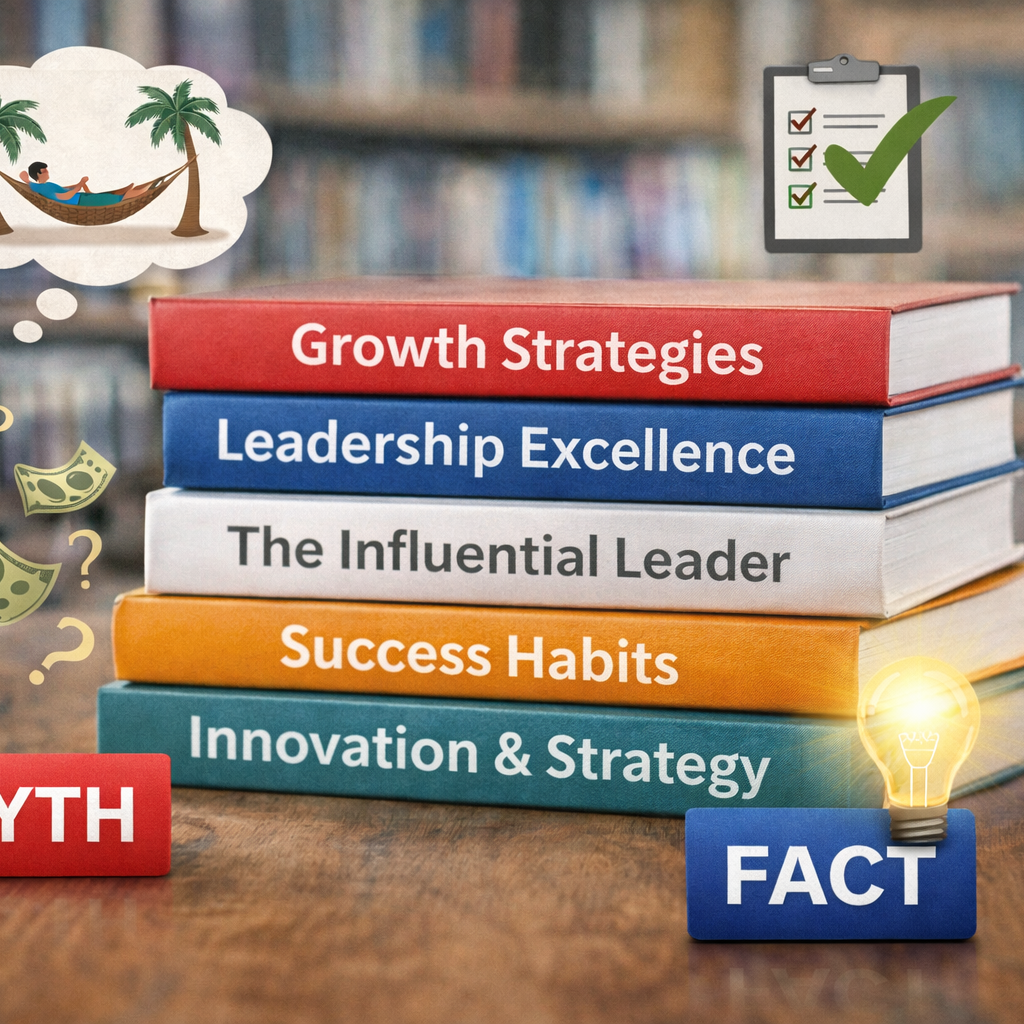

Best Business Books to Read: Myths vs Facts on Growth & Leadership
Key Takeaways
- Understanding the real criteria for selecting impactful business books is crucial for tangible growth.
- Challenging common myths lets entrepreneurs leverage books for leadership and lasting business success.
Are all business books created equal when it comes to guiding your growth and leadership journey? If you’ve ever wondered which books genuinely make a difference—and which just repeat common myths—you’re not alone. Here’s how to cut through the noise, choose books that matter, and take away lessons that foster real progress.
What Makes a Business Book ‘Best’?
Criteria for evaluating business books
Choosing a business book isn’t about picking the one on everybody’s shelf. The best books offer practical strategies, grounded research, and relatable examples you can apply to your own business. Look for:
- Clear, evidence-based frameworks (not just catchy stories)
- Actionable insights that translate to real change
- Authors with proven, varied experience
- New perspectives that challenge assumptions
- Adaptable lessons for different business stages
A strong business book should help you solve current challenges, rethink your approach, or add depth to your leadership skills. It’s not just bestseller hype—it’s about alignment with your needs and values.
Recognizing diverse leadership philosophies
Not all leadership books come from the same school of thought. Some promote collaborative cultures, while others stress decisive, independent action. The most effective leaders learn from a wide spectrum of philosophies, using books to build their own toolkit. As you read, pay attention to:
- Core leadership values and principles
- Context behind each philosophy (industry, company stage, culture)
- How different ideas align or contrast with your business style
A single leadership “formula” seldom fits every entrepreneur. Use books to tailor approaches that fit you, your team, and your long-term goals.
Do Top Books Agree on Growth Myths?
Common misconceptions about scaling
Many popular business books warn about growth traps, but some myths persist. Common scaling misconceptions you’ll find include:
- “Faster is always better.”
- “Growth just requires more effort or capital.”
- “What worked at startup scale works at every stage.”
Books that truly add value don’t shy away from addressing these oversimplifications. Instead, they analyze why some strategies fail in the real world—and teach you how to avoid these classic mistakes.
Separating myth from evidence
Look for books that ground their advice in credible data and real-life stories. For example, some growth myths are debunked through longitudinal studies or interviews with seasoned founders. When a book cites only anecdotal successes, remain critical. Instead, value:
- Long-term case studies (businesses that thrived and struggled)
- Peer-reviewed research or well-documented results
- Disclaimers about context (industry, timing, competition)
When you base your growth strategy on more than just stories, you’re less likely to chase myths—and more likely to achieve sustainable results.
What Are Leadership Facts vs Fiction?
Misunderstood qualities of great leaders
True leaders aren’t defined by charisma alone. Business books sometimes exaggerate qualities like “confidence” or “decisiveness” while overlooking:
- Empathy and active listening
- Self-awareness and vulnerability
- Humility in decision-making
- Willingness to adapt and seek feedback
Great books break down these subtle qualities and show you how to nurture them yourself. When you move beyond superficial traits, you cultivate lasting influence within your business.
Lessons from real-world case examples
The most impactful leadership books distill insights from a broad spectrum of leaders—including those who’ve faced setbacks. These books:
- Share honest accounts of failure and recovery
- Outline step-by-step growth, not just turning points
- Illustrate leadership principles with relatable situations
Use these lessons to reflect on your own leadership path. What strengths are you overlooking? Which habits or beliefs could you improve by learning from others’ experiences?
Which Books Changed How Leaders Think?
Influential titles shaping business mindset
Some books create lasting shifts in how leaders approach business. Classics like “Good to Great” by Jim Collins, “The Lean Startup” by Eric Ries, and “Drive” by Daniel H. Pink have sparked fresh conversations about:
- Building strong foundations before scaling
- Testing and iterating before big investments
- Motivating teams beyond compensation
Books like these don’t offer step-by-step formulas, but rather new ways of thinking. Their real strength comes from encouraging you to question assumptions and experiment within your context.
Unexpected takeaways for entrepreneurs
Sometimes, seemingly small insights from these books create the biggest changes. For example:
- Redefining what “success” means as you grow
- Noticing patterns in your decision-making
- Adopting systems thinking instead of seeking quick wins
Let these unexpected takeaways guide you to adapt, innovate, and stay resilient—especially as your business enters new stages.
Are Growth Myths Hurting Your Business?
Identifying beliefs that block progress
Growth myths can hold you back more than any external factor. Some signs include:
- Feeling pressured to scale before your systems are ready
- Clinging to outdated playbooks because they “worked before”
- Avoiding calculated risks due to the fear of failure
Books that address these traps teach you how to spot limiting beliefs and encourage more adaptive growth strategies.
How to reframe outdated mindsets
To move forward, use business books as tools to challenge your thinking. Ask yourself:
- Does this belief serve my current business model?
- What does the evidence actually say?
- Who can help me evaluate these assumptions?
With the right mindset shift, you’ll begin to see opportunities where others see obstacles, and avoid repeating common scaling mistakes.
How to Choose Books for Real Impact
Matching book recommendations to your stage
Your business needs will change as you grow. Are you just starting out, scaling rapidly, or looking to lead a larger team? Pick books that:
- Address your current pain points
- Feature examples from your business size or industry
- Encourage practices that fit service-based models, if that’s your focus
One size never fits all. Curate your reading list as strategically as you would a new hire or software tool.
Tips to implement lessons for service businesses
Reading is only valuable if it turns into action. To embed what you learn:
- Take notes and summarize actionable points as you read
- Discuss fresh ideas with your team or mastermind group
- Set a small experiment or process to test each core lesson
Over time, even subtle tweaks in your habits and thinking add up to a stronger, more resilient service business.
What Non-Obvious Books Deserve Attention?
Hidden gems for leadership development
Some of the best lessons come from books outside the mainstream. Consider:
- “Turn the Ship Around!” by L. David Marquet (empowerment and trusting teams)
- “Radical Candor” by Kim Scott (honest feedback cultures)
- “Ego Is the Enemy” by Ryan Holiday (overcoming self-blocks)
These hidden gems often fill gaps left by “bestsellers,” focusing on specific behaviors or perspectives you might miss otherwise.
Why lesser-known books matter
Non-obvious business books bring diverse stories and niche expertise. They:
- Challenge you to think beyond common playbooks
- Spotlight voices from different backgrounds or industries
Reading widely diversifies your knowledge base and prepares you for unique challenges on your journey.